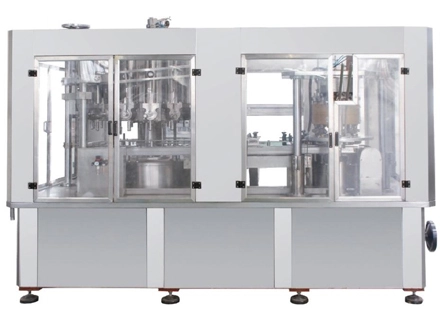
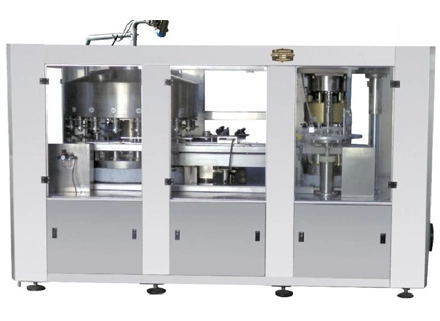
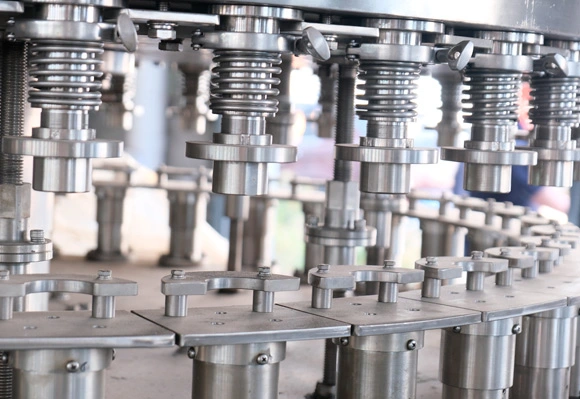
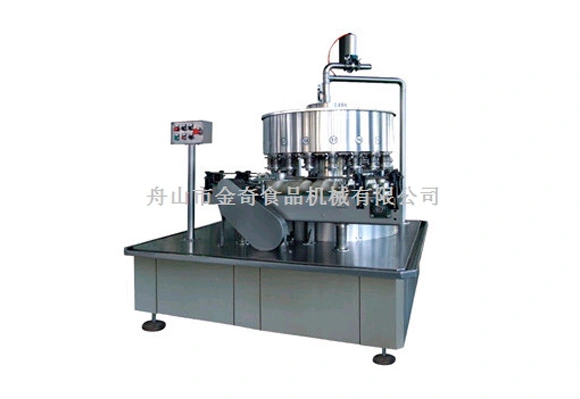
Liquid filling machines play an essential role in modern beverage manufacturing by ensuring accurate, hygienic, and efficient product filling. These machines are designed to transfer liquids into containers with consistent volume control, helping manufacturers reduce material waste, improve production efficiency, and maintain product quality.
A liquid filling machine works by combining liquid supply systems, precision measurement technology, filling valves, and automated control systems to deliver accurate filling results.
Understanding how liquid filling equipment works can help manufacturers select the right solution for their production lines and improve overall operational efficiency.
What Is a Liquid Filling Machine and How Does It Work?
A liquid filling machine is industrial equipment used to automatically fill bottles, cans, or other containers with a specific amount of liquid products. It is widely applied in industries including dairy, beverages, food processing, pharmaceuticals, and cosmetics.
The basic working process of a liquid filling machine includes four main steps:
1. Container Positioning
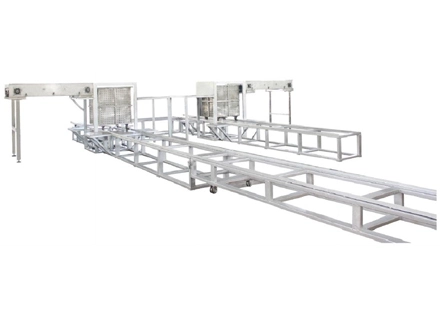
Before filling begins, empty containers are transported through a conveyor system and accurately positioned under filling nozzles. Sensors detect container placement to ensure stable and continuous operation.
2. Liquid Supply and Measurement
The liquid product is transferred from a storage tank into the filling system. Depending on the liquid characteristics and production requirements, the machine uses different measurement technologies, including:
These methods ensure each container receives a consistent amount of product.
3. Filling Operation
Once containers are positioned correctly, filling valves open automatically and release the liquid into each container. Advanced filling systems are designed to reduce dripping, overflow, and product loss while maintaining high filling accuracy.
4. Container Transfer
After filling, containers move to the next stage, such as capping, sealing, labeling, or packaging, creating a complete automated production workflow.
Modern filling equipment integrates PLC control systems and intelligent automation technology, allowing manufacturers to achieve higher productivity with fewer manual operations.
What Are the Main Components of a Liquid Filling Machine?
A liquid filling machine consists of several key components that work together to achieve accurate and stable filling performance.
Liquid Storage Tank
The storage tank temporarily holds liquid products before filling. For beverage and dairy applications, food-grade stainless steel is commonly used because it provides excellent corrosion resistance and meets hygiene requirements.
Filling Pump and Measuring System
The filling system determines how much liquid enters each container. Different products require different filling technologies:
Low-viscosity liquids may use gravity or flow-based filling.
Thick liquids may require piston filling systems.
Beverage products may require precise flow control to prevent foaming.
Selecting the correct filling method helps improve efficiency and maintain product consistency.
Filling Valves
Filling valves control liquid flow during the filling process. High-quality valves help improve accuracy, reduce leakage, and support continuous production.
Automatic Control System
Modern filling machines are equipped with PLC control systems and touch-screen interfaces. Operators can easily adjust filling parameters, monitor production status, and improve overall operation efficiency.
What Factors Should You Consider When Choosing a Liquid Filling Machine?
Choosing the right filling equipment requires careful consideration of product characteristics, production goals, and future expansion plans.
Product Characteristics
Different liquids require different filling technologies. Before purchasing equipment, manufacturers should evaluate:
Liquid viscosity
Foaming characteristics
Particle content
Temperature requirements
Packaging type
For example, dairy products and fruit beverages may require different filling configurations.
Production Capacity
The required output determines the appropriate machine design. Small and medium-sized producers may choose compact systems, while large beverage factories often need fully automated high-speed filling lines.
Filling Accuracy
Accurate filling directly affects production costs and product consistency. High-quality machines help minimize overfilling and reduce unnecessary material consumption.
Automation Requirements
Automation features such as automatic detection, PLC control, and digital monitoring can significantly improve production efficiency and reduce labor dependence.
Why Choose KingQi as Your Reliable Liquid Filling Machine Manufacturer?
Founded in 2007, KingQi has built strong expertise in filling equipment manufacturing through advanced technology, professional engineering capabilities, and continuous innovation.
KingQi relies on strong technical force, effective technical support, flexible business philosophy, and high-quality service to provide reliable solutions for global customers.
The company has:
Advanced manufacturing technology
Multiple R&D patents
Close cooperation with leading enterprises in China
Recognition as one of the top ten supporting enterprises of the China Canned Food Association
Customer-focused product development strategies
With years of industry experience, KingQi continuously improves its filling solutions to meet the changing needs of beverage manufacturers.
Whether you require a customized beverage production solution or want to learn more about available equipment options, you can Contact Us for professional support.
Conclusion
A liquid filling machine works through a combination of liquid delivery systems, measurement technology, filling valves, and automation controls to achieve accurate and efficient filling operations.
For beverage and dairy manufacturers, choosing the right equipment is essential for improving production efficiency, maintaining hygiene standards, and reducing operating costs.
Solutions such as a milk filling machine and fruit juice filling machine provide specialized advantages for different beverage applications.
With professional experience, advanced technology, and customer-focused solutions, KingQi continues to support beverage manufacturers worldwide with reliable filling equipment.
FAQ About Liquid Filling Machines
What products can a liquid filling machine handle?
Liquid filling machines can be used for various products, including milk, juice, beverages, sauces, pharmaceutical liquids, and other fluid products.
How can a liquid filling machine improve production efficiency?
Automated filling equipment improves efficiency by increasing filling speed, reducing manual labor, maintaining consistent filling volumes, and minimizing product waste.
Can filling machines be customized for different production requirements?
Yes. Professional manufacturers can customize filling solutions according to product characteristics, container sizes, production capacity, and automation requirements.