Selecting filling and sealing machine manufacturers starts with the product, packaging format, and required production output. Equipment handling tomato paste in metal cans has different requirements from systems filling carbonated drinks or sealing dairy desserts in cups. KingQi, KHS, Pneumatic Scale Angelus, and Serac supply equipment for different applications within this category. Comparing their products, filling methods, and closing configurations helps procurement and engineering teams identify suitable suppliers. This guide provides a manufacturer overview, representative product comparisons, and practical selection criteria for food and beverage production.
Filling and Sealing Machine Manufacturers at a Glance
An initial supplier comparison should group equipment by product and packaging format. Concentrated foods, carbonated beverages, and cup-packed desserts require different filling conditions and closure technologies.
| Manufacturer | Relevant Applications | Packaging Format | Representative Equipment | Equipment Configuration |
|---|
| KingQi | Concentrated foods, non-carbonated beverages, and milk drinks | Metal cans | JQ7B18(12)A-250; JQ6B300 | Combined filling and can seaming units |
| KHS | Beer, carbonated soft drinks, and still beverages | Beverage cans | Innofill Can DVD | Volumetric can filling with coordinated seamer integration |
| Pneumatic Scale Angelus | Craft beverage canning | Beverage cans | CB50 | Inline filling integrated with a can seamer |
| Serac | Dairy products and desserts | Preformed cups and pots | NEO; LINEA; LINEA XS | Cup filling and sealing systems |
These manufacturers were selected based on official information identifying relevant food and beverage applications and equipment configurations. The listing order does not represent an independently tested performance ranking.
Four Filling and Sealing Machine Manufacturers to Consider
KingQi
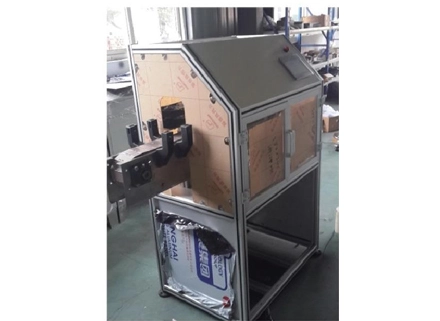
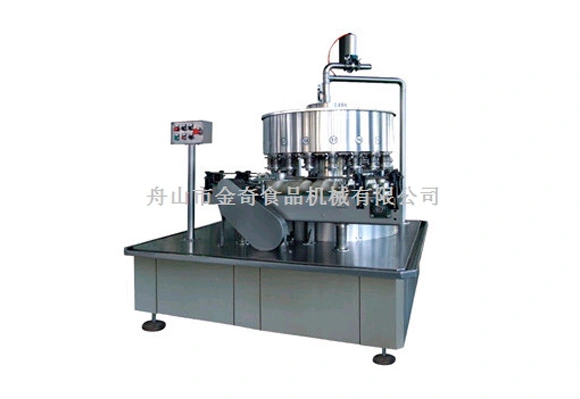
KingQi supplies filling and seaming equipment for canned food and beverage production. Its machines include configurations for concentrated products such as tomato paste, honey, and condensed milk, as well as non-carbonated beverages and milk drinks.
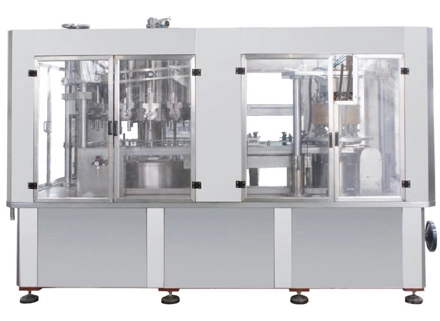
For processors using metal cans, the company offers combined filling and closing equipment with different filling-head arrangements and production capacities.
| Product | Main Applications | Filling and Seaming Configuration | Selected Specifications |
|---|
| JQ7B18(12)A-250 Concentrated Filling and Seaming Machine | Tomato paste, honey, and condensed milk | 18 or 12 filling heads with four seaming heads | Can height: 39–133 mm; can diameter: 52.3–99 mm |
| JQ6B300 Filling and Seaming Machine | Non-carbonated beverages and milk drinks | 24 filling heads with six seaming heads | Stated capacity: 100–300 cans/min; can height: 70–133 mm; can diameter: 52.3–99 mm |
Source: www.kingqifilling.com
KHS
KHS supplies filling and packaging systems for beverage production. Its can-filling equipment serves applications including beer, carbonated soft drinks, and still beverages.

The Innofill Can DVD uses volumetric filling and supports application-specific operating configurations. Beverage characteristics, filling temperature, and the required production rate guide the selection of filling functions and seamer integration.
| Product | Main Applications | Filling Configuration | Selected Features |
|---|
| Innofill Can DVD | Beer, carbonated soft drinks, and still beverages | Volumetric can filling with coordinated seamer integration | Beverage-specific operating settings; hot-filling option for juice, tea, and still drinks |
Source: www.khs.com
Pneumatic Scale Angelus
Pneumatic Scale Angelus supplies filling and seaming equipment for beverage canning. Its CB50 combines inline filling and can closing in an integrated system for craft beverage production.
The configuration brings together multiple filling heads and a single seaming head, with individual fill-volume adjustment through the operator interface.
| Product | Main Applications | Filling and Seaming Configuration | Selected Specifications |
|---|
| CB50 Integrated Filler and Seamer | Craft beverage canning | Six inline filling heads with a single-head can seamer | Stated operating range: 15–50 cans/min; magnetic flowmeter filling; individual fill-volume adjustment |
Source: psangelus.uk.com
Serac
Serac manufactures filling and sealing equipment for food products in preformed cups and pots. Its cup-packaging systems serve dairy and dessert applications, with configurations for different production volumes and dosing requirements.
Equipment functions include product filling, lid placement, and sealing. Selection depends on the product texture, container format, filling sequence, and required output.
| Product | Main Applications | Equipment Type | Selected Features |
|---|
| NEO | Food products in preformed cups and pots | Cup filling and sealing machine | Positioned for small production runs |
| LINEA | Dairy desserts in preformed cups | Modular filling and sealing machine | Product dosing, lid placement, and heat sealing; configurations for filling multiple products |
| LINEA XS | Cup-packed food products, including dairy desserts | Cup filling system | Stated output range: 5,000–12,000 cups/hour |
Source: www.serac-group.com
How to Compare Filling and Sealing Machine Manufacturers
A consistent technical brief makes supplier comparisons more useful. Each manufacturer should receive the same product information, packaging specifications, and production targets so that differences between proposed systems are clear.
Product Compatibility
Descriptions such as “liquid,” “sauce,” or “dairy product” provide only a starting point. Equipment selection requires a more detailed understanding of how the product behaves during filling. For beverages, the main variables include filling temperature, carbonation, foaming behavior, and target quantity. For concentrated foods, consistency at the intended operating temperature affects dosing and discharge.
Products containing pieces require additional information about particle size, solids concentration, and acceptable product damage. These characteristics should be considered throughout the product path, including feed arrangements and filling components.
| Product Characteristic | Selection Consideration | Useful Evaluation Evidence |
|---|
| Viscosity changes with temperature | Filling performance at the intended operating temperature | Trial conditions and measured results |
| Foaming or carbonation | Filling configuration and beverage operating conditions | Application-specific specifications and trials |
| Particles or inclusions | Compatibility with particle size and solids concentration | Trials using representative product |
| Multiple recipes | Adjustments, cleaning steps, and parts required between products | Product-change procedure |
| Different fill quantities | Performance across the planned filling quantities | Results for agreed fill settings |
Container and Closure Compatibility
The container and closure should be evaluated as a complete package.
For metal cans, selection requires can-body and end drawings for each planned format. Can height and diameter help establish initial compatibility, while the specific can-and-end combination determines the required seaming tooling and handling parts.
For cups, the container material, sealing surface, and lidding material influence the sealing process. Changes to cup dimensions or materials may require different tooling or operating settings.
Precise terminology makes equipment enquiries easier to compare:
Can filling and seaming: Filling a can and mechanically forming the specified seam with its end.
Cup filling and sealing: Filling a cup and applying a compatible lid, film, or foil.
Bottle filling and capping: Filling a bottle and applying its specified closure.
Production Capacity
Capacity should be compared under equivalent conditions: the same product, fill quantity, container, and operating temperature.
The machine’s running rate and the number of accepted finished packs produced during a shift are different measures. Cleaning, changeovers, stoppages, and rejected containers affect the output available to the factory.
A useful capacity evaluation includes sustained operation over an agreed period, together with records of filling performance, closure quality, interruptions, and rejects. This connects machine speed to the facility’s actual production requirements.
Cleaning, Changeover, and Production-Line Integration
An automatic filling and sealing system must support the facility’s daily operating routine. Cleaning access, product changes, and equipment interfaces influence how effectively the machine fits into production.
Cleaning and Product Changes
The cleaning procedure should identify components requiring removal, operator tasks, and access points. Where clean-in-place functionality is included, its coverage should be clearly defined for the complete product path.
Facilities processing several recipes should consider the production sequence and work required between products. A recipe change may involve cleaning, adjustments to filling settings, and checks before production resumes.
Container Format Changes
Changing can height may require different work from changing can diameter or end size. Cup format changes can involve handling parts, tooling, and sealing adjustments.
A meaningful changeover assessment covers the complete sequence from the end of one production run to accepted output in the next format. This includes parts replacement, adjustment, necessary cleaning, and verification.
Equipment Interfaces and Installation
The filler and closing machine depend on coordinated product supply, container feeding, and discharge. Conveyors, coding, inspection, and downstream processing equipment must also be considered in the line design.
The integration plan should define the system’s response to upstream interruptions and downstream stops. Where several suppliers are involved, responsibility for interface coordination and combined commissioning should be assigned.
Installation planning should cover utilities as well as floor space. Electrical supply, compressed air, water, drainage, and any application-specific gas or heating requirements need to match the selected configuration. The layout should allow access for maintenance, cleaning, and format changes.
What Evidence Should Filling and Sealing Machine Manufacturers Provide?
A defined equipment configuration supported by measurable performance results provides a practical basis for supplier selection.
Product trials and factory acceptance testing should use agreed materials, operating conditions, and inspection methods. Representative products, containers, and closures help establish how the equipment performs in the intended application.
| Evaluation Area | Evidence to Request |
|---|
| Filling performance | Measured fill results, sampling method, and operating conditions |
| Closing performance | Package inspection results against agreed specifications |
| Sustained output | Production count, test duration, stoppages, and rejects |
| Container handling | Demonstration of stable feeding, transfer, and discharge |
| Product handling | Results for foaming, dripping, or particle damage where relevant |
| Changeover | Required parts, demonstrated procedure, and elapsed time |
| Cleaning and access | Demonstration of cleaning tasks and maintenance access |
| Controls and recovery | Results for agreed interruption and restart scenarios |
The acceptance record should identify the configurations tested at the factory and any remaining site checks. When substitute materials are used, the record should explain which operating characteristics still need verification with the actual product or package.
Service Support and Spare Parts
Service arrangements are part of the equipment comparison because they affect installation, operator readiness, and ongoing maintenance.
The supply agreement should define commissioning support, operator training, technical documentation, remote assistance, and on-site service. Export projects should establish documentation language and responsibility for local installation work.
A practical spare-parts package distinguishes routine wear items from format-specific components. For canning equipment, this includes replacement seaming tooling and handling parts for current and planned containers.
When the filler and seamer come from different manufacturers, a clear support arrangement helps resolve issues involving both machines and their interface.
Preparing a Technical Enquiry for Machine Selection
A detailed enquiry helps filling and sealing machine manufacturers recommend equipment that matches the production task.
| Information to Include | Required Details |
|---|
| Product | Recipe type, filling temperature, consistency, carbonation, and any particles |
| Packaging | Container and closure drawings, dimensions, materials, and representative samples |
| Production | Fill quantities, target output, shift pattern, and planned formats |
| Cleaning | Recipe changes and proposed cleaning procedures |
| Installation | Available layout, utilities, and upstream and downstream equipment |
| Acceptance | Required demonstrations, inspection methods, and performance targets |
For concentrated foods and non-carbonated beverages in cans, a technical enquiry to KingQi should include the recipe, can-and-end drawings, target capacity, and line layout. These details provide the basis for model selection and a representative trial plan.
FAQs About Filling and Sealing Machine Manufacturers
Which filling and sealing machine manufacturers should be considered for food production?
KingQi, KHS, Pneumatic Scale Angelus, and Serac serve different applications covered in this guide. KingQi’s representative models handle concentrated foods and still beverages in cans. KHS and Pneumatic Scale Angelus supply beverage canning equipment, while Serac manufactures filling and sealing systems for preformed cups. Selection should follow the product, packaging, and production requirements.
What is the difference between filling and sealing and filling and seaming?
Filling and sealing is a broad description covering several closure technologies. Filling and seaming specifically refers to filling a can and mechanically forming the required seam with its end. Naming the closing process helps suppliers identify the appropriate equipment.
Is an integrated system preferable to separate filling and closing machines?
The appropriate arrangement depends on the project. An integrated system coordinates filling and closing within a defined configuration. Separate machines may suit an existing layout or phased upgrade, provided their operating speeds, transfer arrangements, and controls work together.
Can one machine handle beverages, sauces, and products containing particles?
Some configurations support several products, but suitability depends on temperature, viscosity, carbonation, particle characteristics, and required output. Representative trials help establish the operating conditions for each recipe.
How should production capacity be compared?
Use identical product and packaging assumptions, then evaluate the complete filling and closing system over a defined period. Record accepted output, stoppages, and rejects alongside the machine’s running speed.
What should a format-change quotation include?
It should identify replacement tooling, handling parts, settings, operator tasks, and verification steps. Changes to container height, diameter, and closure format should be addressed separately because they can involve different procedures.
Does filling and sealing equipment determine product shelf life?
The equipment contributes to the production process, but shelf life also depends on product formulation, packaging, processing, hygiene controls, storage conditions, and appropriate validation.