Food product machinery manufacturing companies serve different stages of food production, from sorting and cutting ingredients to filling containers, processing sealed products, and checking finished packs. Their equipment ranges can overlap, but their engineering priorities and supply responsibilities often differ considerably. For food factories, a useful supplier shortlist begins with the production task. A processor replacing a vegetable dicer needs a different equipment specialist from a business installing a can filling line or expanding a retort room. Understanding these distinctions helps procurement and engineering teams identify relevant manufacturers and define a clear equipment specification.
This guide profiles six companies by equipment specialization. The selection focuses on documented product ranges and their relevance to food production. The order does not represent a ranking by market share, company size, or overall performance.
How These Food Machinery Companies Were Selected
The companies included in this guide publish information about equipment used in food processing, packaging, or inspection. Each represents a distinct area of specialization, allowing buyers to compare different supply roles across a production project.
Three considerations guide the selection:
Documented equipment offerings: Official product information identifies the machinery or systems supplied.
Relevant food applications: Published applications connect the equipment to identifiable production requirements.
A distinct engineering focus: Each company illustrates a different task, such as cutting, sorting, filling, thermal processing, or inspection.
The categories below describe the capabilities discussed in this article, rather than each company’s entire portfolio. Inclusion also does not imply that the companies have an established partnership or that their equipment can be combined without integration engineering.
Food Product Machinery Manufacturing Companies at a Glance
The following overview provides a starting point for identifying manufacturers by production requirement. Final suitability depends on the specific product, equipment configuration, and project scope.
| Company | Equipment Specialization | Food Applications | Supply Scope Discussed |
|---|
| KingQi | Can filling, seaming, and supporting equipment | Canned foods, beverages, and sauces | Individual machines and configured equipment combinations |
| Key Technology | Optical sorting, conveying, and food handling | Vegetables, fruits, potatoes, nuts, and other foods | Sorting equipment, conveyors, and integrated handling systems |
| Urschel | Slicing, dicing, shredding, and size reduction | Fruits, vegetables, meat, cheese, and other ingredients | Specialized industrial cutting machines |
| Fenco | Tomato and fruit processing | Tomato paste, puree, juice, and fruit products | Processing equipment and configured processing lines |
| Allpax | Retort processing and retort-room automation | Packaged foods requiring in-container thermal processing | Retorts, handling equipment, controls, and automation systems |
| LOMA SYSTEMS | Product inspection and checkweighing | Food processing and packaging applications | Metal detection, X-ray inspection, checkweighing, and combination systems |
Company Profiles by Equipment Specialization
KingQi — Can Filling, Seaming, and Supporting Equipment
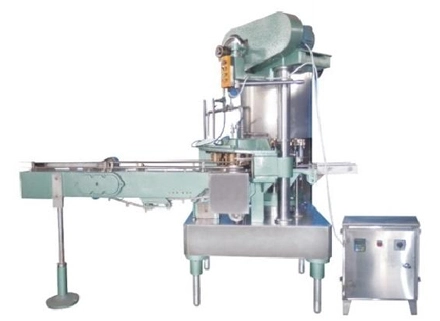
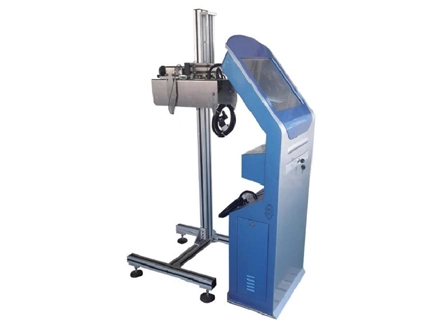
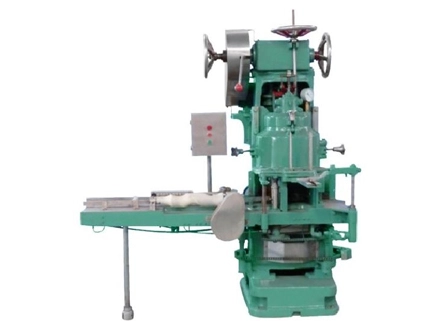
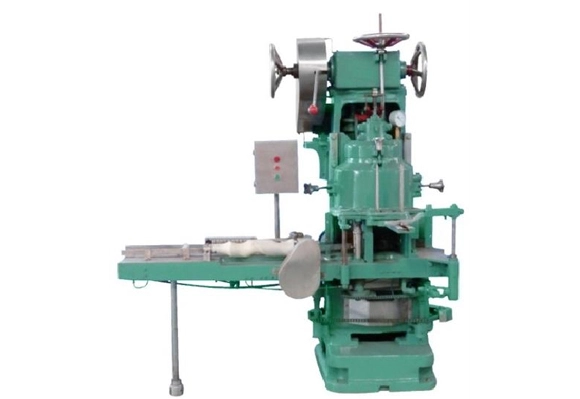
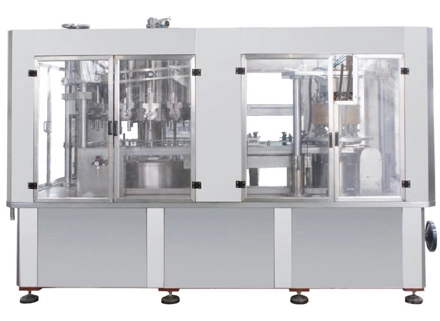
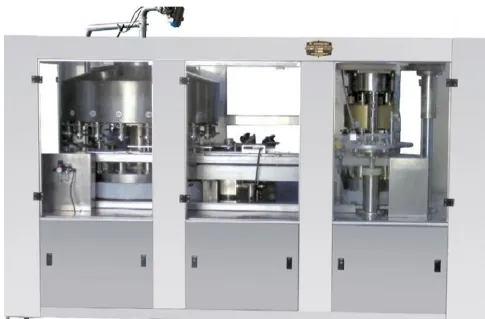
As one of the leading food product machinery manufacturing companies, KingQi supplies equipment for canned food production, with a portfolio covering filling machines, sealing machines, combined filling and sealing units, and supporting machinery. Its published range also includes empty-can depalletizing, cage loading and unloading, can drying, and inspection equipment. These offerings position the company within the filling, closing, and related handling stages of a canning operation.
For a canned food project, the evaluation should begin with the product and container. Liquid, viscous, and particulate foods can require different filling arrangements, while can dimensions and closure specifications affect machine selection. KingQi’s role should therefore be defined around the required equipment combination and its interfaces with the wider production line. Where upstream processing or downstream thermal treatment is involved, the quotation should identify which equipment and integration responsibilities are included.
Key Technology — Food Sorting and Conveying
Key Technology develops optical sorting, conveying, and food handling equipment. Its published applications include potatoes, vegetables, fruits, berries, nuts, and other food categories. The company’s portfolio illustrates the role of a specialist that manages product selection and movement within a processing operation. Its sorting and conveying solutions include individual equipment platforms and integrated systems.
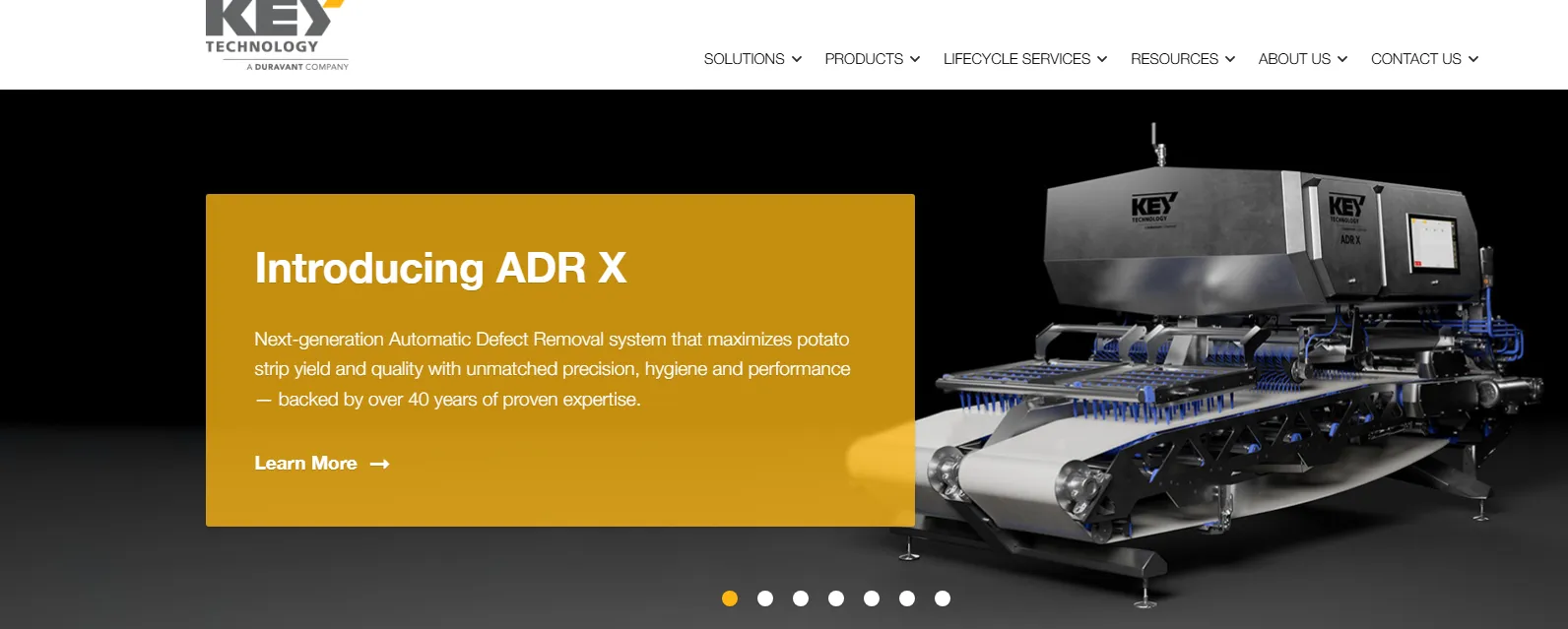
A relevant project might involve inspecting incoming ingredients, handling food between processing stages, or improving the consistency of material presented to another machine. The purchasing specification should describe the product condition, required sorting task, and upstream and downstream interfaces. A sorting system’s suitability should be assessed against the actual material and acceptance criteria, rather than inferred from the equipment category alone.
Source: https://www.key.net/en/
Urschel — Cutting and Size Reduction
Urschel manufactures industrial equipment for slicing, dicing, shredding, milling, and other size-reduction tasks. Its published applications span fruits, vegetables, potatoes, meat, cheese, and additional ingredients. The company’s food cutting equipment provides a reference point for projects in which ingredient dimensions or consistency are a central production requirement.
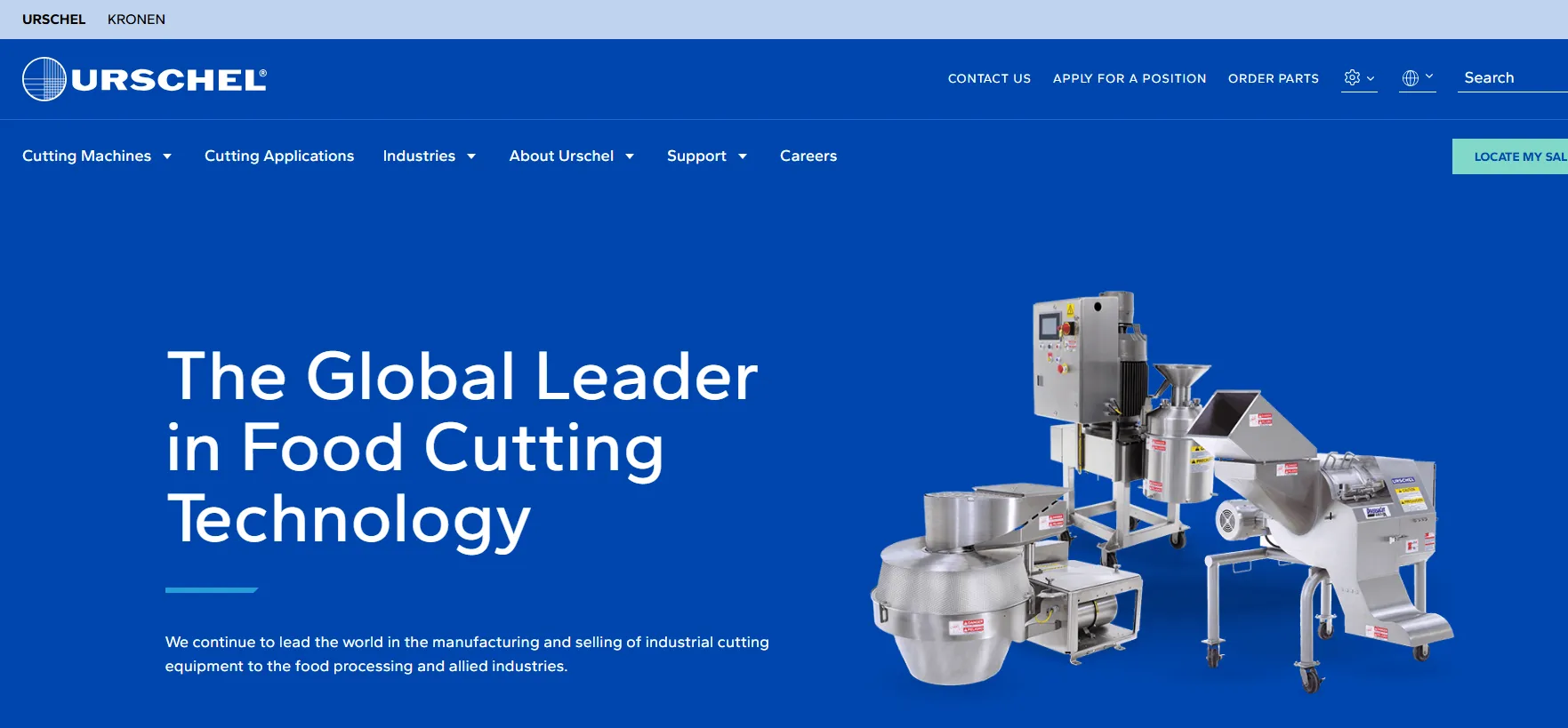
Its relevance is particularly clear when a factory needs a defined cut before further processing or packaging. Supplier discussions should establish the incoming product’s condition, the desired output, and the acceptable variation in cut size. Where cutting is one part of a larger project, the equipment scope should also clarify feeding, discharge, and handling arrangements. A specialized cutting machine should be evaluated as a process component, with the surrounding line requirements addressed separately.
Source: https://www.urschel.com/
Fenco — Tomato and Fruit Processing Lines
Fenco supplies equipment and processing lines for tomato and fruit products. Its published tomato applications include paste, peeled tomatoes, diced tomatoes, puree, and juice. This makes the company an example of a manufacturer whose offering is organized around the transformation of a particular raw material into several finished product forms.
For buyers, the key question is where the proposed processing line begins and ends. A project specification should identify the incoming raw material, required output, and the equipment included between those points. Packaging interfaces also need to be explicit. The term “processing line” should be read alongside an equipment schedule and responsibility list, particularly when the finished product will pass to separately sourced filling or packaging machinery.
Source: https://www.fenco.it/en/tomato-processing-equipment/
Allpax — Retort Processing and Automation
Allpax supplies production retorts, research and development retorts, controls, container handling equipment, and retort-room automation. Its retort processing and automation range illustrates the distinction between purchasing a thermal-processing vessel and developing a broader system for loading, processing, tracking, and unloading containers.
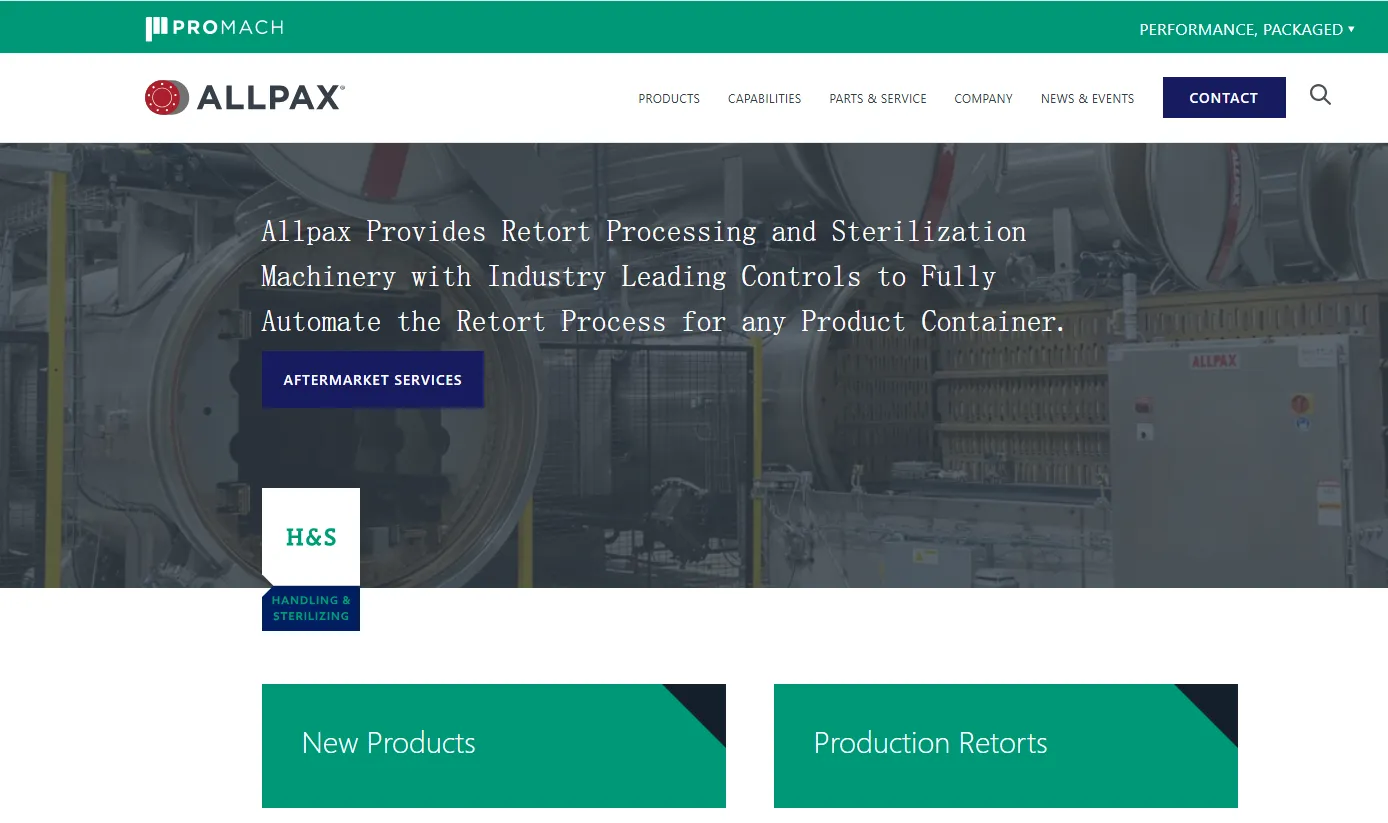
Factories evaluating this type of supplier should define the product, packaging format, batch requirements, and handling arrangements. Retort-room projects also require coordination with the equipment that supplies and receives containers. The equipment proposal should specify the responsibilities for controls, utilities, installation, and commissioning. Thermal-process development and validation should be addressed explicitly within the project; selecting a retort does not, by itself, establish an approved process for every food and container combination.
Source: https://www.allpax.com/
LOMA SYSTEMS — Inspection and Checkweighing
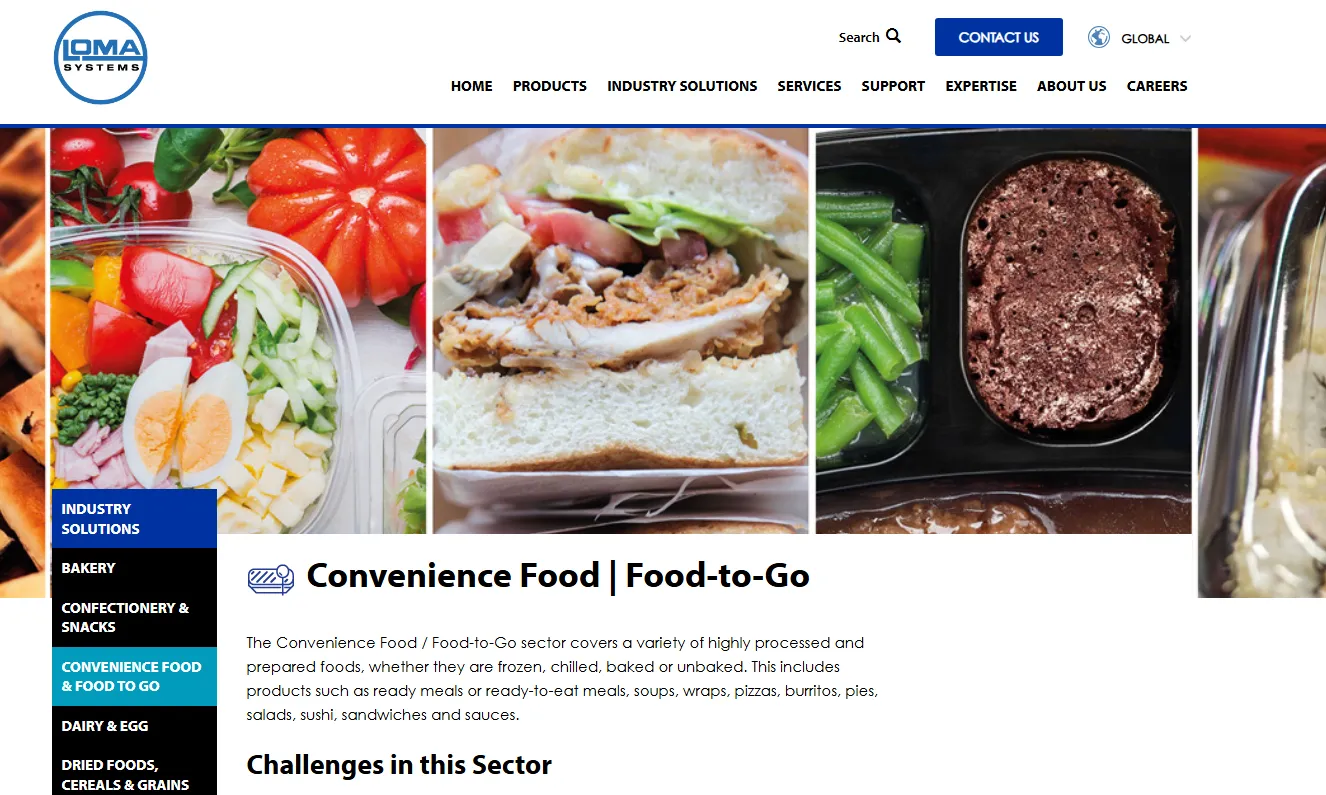
LOMA SYSTEMS manufactures metal detection, X-ray inspection, checkweighing, and combined inspection equipment. Its published applications cover several food sectors and different product presentation formats. The company’s inspection equipment represents the quality-control role within food processing and packaging.
The appropriate inspection configuration depends on the product, packaging, inspection objective, and installation position. Buyers should describe what must be detected or measured, how the product reaches the system, and what should happen when a pack fails inspection. Acceptance trials should reflect those conditions. Inspection equipment also requires defined interfaces for rejection, product tracking, and line controls where applicable, so its scope extends beyond simply fitting a machine into available conveyor space.
Source: https://www.loma.com/
Matching Equipment Specialists to a Production Project
These companies become easier to evaluate once a project is divided into specific equipment responsibilities. The starting question is whether the factory is replacing a machine, expanding a production stage, or building a new line.
| Project Type | Main Procurement Question | Scope to Clarify |
|---|
| Single-machine replacement | Can the equipment perform the required task within the existing line? | Feed and discharge interfaces, available space, controls, and installation requirements |
| Production-stage expansion | Can the equipment operate together at the required output? | Equipment boundaries, capacity matching, transfer arrangements, and commissioning |
| New production line | Who is responsible for coordinating the complete system? | Overall layout, utilities, controls, supplier interfaces, and integrated acceptance testing |
Consider a project involving prepared vegetables packed into cans. Depending on the product and process, the equipment assessment may involve ingredient preparation, filling and seaming, thermal treatment, and inspection. Each stage requires its own specification, while the overall project needs a party responsible for coordinating the interfaces.
The purpose of the company list is to help identify relevant specialists for those tasks. It does not establish a ready-made combination of compatible machines.
An equipment responsibility schedule makes the distinction practical. It should identify the supplier for each machine, the party responsible for connecting it to adjacent equipment, and the organization that will coordinate commissioning and acceptance.
Single-Machine Manufacturers and Integrated Line Suppliers
A specialized manufacturer can be a suitable choice when the production requirement is clearly defined. Replacing a cutter, adding an inspection station, or installing a particular filling unit may allow a factory to retain most of its existing infrastructure.
Projects involving several production stages require a broader coordination role. An integrated line supplier may manufacture some equipment and source other components from specialist companies. Procurement teams should establish that arrangement before comparing proposals.
A clear quotation should explain:
Which equipment the supplier manufactures and which items come from other companies.
Who is responsible for mechanical connections and control interfaces.
Which installation, commissioning, and training activities are included.
How performance will be assessed across the supplied equipment.
Who provides service and spare parts for each major component.
These details make proposals more comparable. Two suppliers may both describe an offering as a complete line while including different equipment, engineering work, or site services.
Information Needed Before Shortlisting Manufacturers
A useful enquiry gives manufacturers enough detail to assess the application and identify the limits of their proposed equipment.
The product description should explain its physical form and relevant handling characteristics. Container information should include dimensions, material, closure format, and the range of sizes planned for production. Output requirements should distinguish the immediate production target from potential future expansion.
For an existing factory, a layout and a description of adjacent equipment help establish whether a proposed machine can fit and connect as intended. Available utilities, cleaning arrangements, and maintenance access should also be discussed.
Representative samples and a written acceptance plan can then support more meaningful supplier comparisons. For example, a cutting trial may focus on output size and consistency, while a filling project requires its own product- and container-specific criteria.
For canned food projects, the initial brief should clearly separate ingredient processing, can filling and closing, thermal treatment, and supporting equipment. This gives manufacturers a practical basis for explaining both their capabilities and the parts of the project requiring additional suppliers.
FAQs About Food Product Machinery Manufacturing Companies
What equipment do food product machinery manufacturing companies supply?
Their offerings vary by specialization. Some manufacture cutting, sorting, or processing machinery, while others focus on filling, sealing, thermal processing, or inspection. A company’s relevance should be assessed against the specific production task and its documented equipment range.
Can one manufacturer supply an entire food production line?
Some suppliers provide integrated lines, potentially combining their own machinery with equipment from other manufacturers. The proposal should identify the complete equipment list and responsibility for integration, installation, commissioning, and service. The phrase “complete line” alone does not define those boundaries.
What is the difference between a machinery manufacturer and a system integrator?
A machinery manufacturer produces equipment for particular tasks. A system integrator coordinates equipment and interfaces so they can operate within a larger system. One company may perform both roles, but the responsibilities should be stated in the project scope.
What information is needed to shortlist manufacturers for a canned food project?
The initial brief should include the food product, can and closure specifications, required output, planned size changes, and the production stages involved. Existing layouts, utilities, sample availability, and acceptance requirements help suppliers determine an appropriate equipment configuration.
Should manufacturers in different equipment categories be ranked against each other?
A single ranking offers limited value when companies perform different production tasks. Comparing manufacturers within a defined equipment category is more useful. Across categories, the priority is establishing which company can fulfil each responsibility and how those responsibilities will be coordinated.